

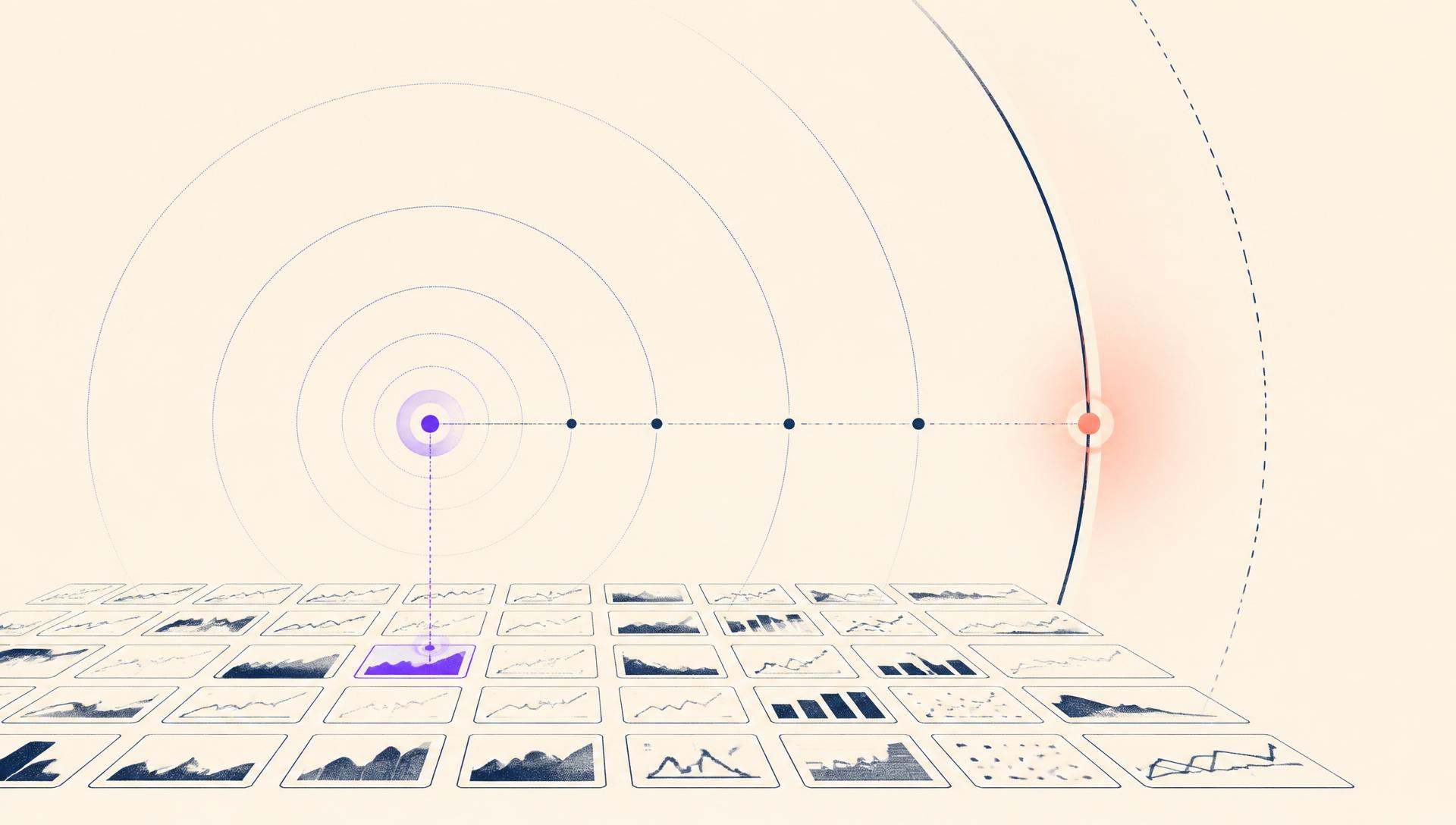
Quarterly compliance reporting is a backward-looking control. By the time a covenant calculation lands, the deterioration it describes is three to five months old. For a performing book that is fine. For the two or three names that will define your loss rate, it is far too late.
The three layers of a monitoring stack
Layer one: mechanical compliance
Ingest the reporting pack, recompute every covenant from the credit agreement definitions, and flag deviations. This should be fully automated and require zero analyst time when everything ties.
Layer two: trajectory
Compliance is binary; trajectory is not. Track the direction and slope of the ratios, not just the level. A borrower moving from 4.6x to 4.9x to 5.1x against a 5.75x test is a different credit from one flat at 5.1x for three quarters.
Layer three: signals outside the reporting pack
The earliest warnings are rarely financial statements. They are late reporting, a change of auditor, a departing CFO, a hiring freeze visible in job postings, deteriorating supplier terms, or a sponsor going quiet. These are unstructured and were historically impossible to systematise. They are not anymore.
Making alerts survivable
The failure mode of monitoring systems is noise. An alert that fires on twenty names a week gets ignored within a month.
- Rank, do not just flag. Every alert should carry an estimated severity and the reason it fired.
- Route by ownership. An alert with no named owner is a notification, not a control.
- Close the loop. Record what was done. A monitoring system that cannot show what happened after each alert cannot be defended to an LP or a regulator.
Reporting-pack ingestion is the unglamorous foundation
Borrowers submit in whatever format their finance team uses: PDF packs, Excel exports, occasionally a scanned page. Manual re-keying is why so many teams monitor on a lag. Automating that ingestion — with the same citation discipline used in underwriting — is what makes everything above possible.
What to measure
Two numbers tell you whether monitoring is working: median days from period end to a reviewed covenant calculation, and lead time on the last five credits that required intervention. If the second number is not improving, you have built a reporting system rather than an early-warning system.